Hammerstein Ballroom
The Vagina MonologuesHammerstein Ballroom is the New York City venue most decisively associated with the birth of V-Day: on February 14, 1998, it hosted the first benefit performance of The Vagina Monologues, an event that raised more than $100,000 and launched a movement against violence toward women. The theater became the setting where a play assembled from women’s accounts met a large public audience—and where a single performance began to take on the force of collective action.
The first V-Day benefit
The performance at Hammerstein Ballroom was the first project of the V-Day organizers and was designed to raise both money and awareness. It took place on Valentine’s Day, a date whose customary associations were redirected toward confronting violence against women. The benefit joined a theatrical work to a public campaign: the play gave the event its form, while the fundraising purpose extended its consequences beyond the stage.
The scale of the evening was visible before the performance began. The event sold out, yet hundreds of people continued to clamor outside on the street, hoping to get in. Twenty-five hundred people lined up outside the ballroom. That line made the venue’s importance more than a matter of its address: people who could not enter still gathered around the event, expressing a desire to take part in something described as groundbreaking.
A performance built from many accounts
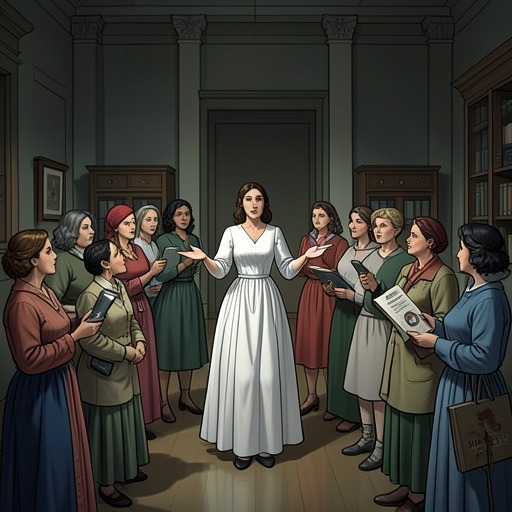
The work performed inside the ballroom had grown from interviews. Eve Ensler spoke with more than two hundred women, including older and younger women, married and single women, lesbians, college professors, actors, corporate professionals, sex workers, African American women, and Hispanic women. Their accounts became the material of the monologues, bringing distinct experiences of women’s bodies and lives into a shared theatrical setting.
At Hammerstein Ballroom, that accumulated testimony was presented as a benefit rather than remaining only on the page or in the interview. The event’s form joined performance, public attention, and fundraising. Its audience included women and men, students and businesspeople, mothers and activists; they responded by laughing, gasping, falling silent, crying, and cheering. The shifting reactions suggest a room attending not just to theatrical technique but to material that could unsettle, move, and rally its listeners.
From venue to movement
The evening raised more than $100,000 and launched V-Day. In the account of the event, the benefit is therefore both a particular night at a particular New York City theater and the beginning of a wider undertaking. The ballroom concentrated performers, organizers, and a crowded public audience in one place; the movement carried the event’s purpose beyond that room and into later projects and communities.
The venue’s association with the performance also marks a change in how Valentine’s Day could be used. Rather than treating the date solely as a celebration of romance, the event made it a platform for awareness and action against violence toward women. The crowd outside, the sold-out performance, and the money raised give that change concrete form: a theatrical gathering became a public point of departure for continuing work.